
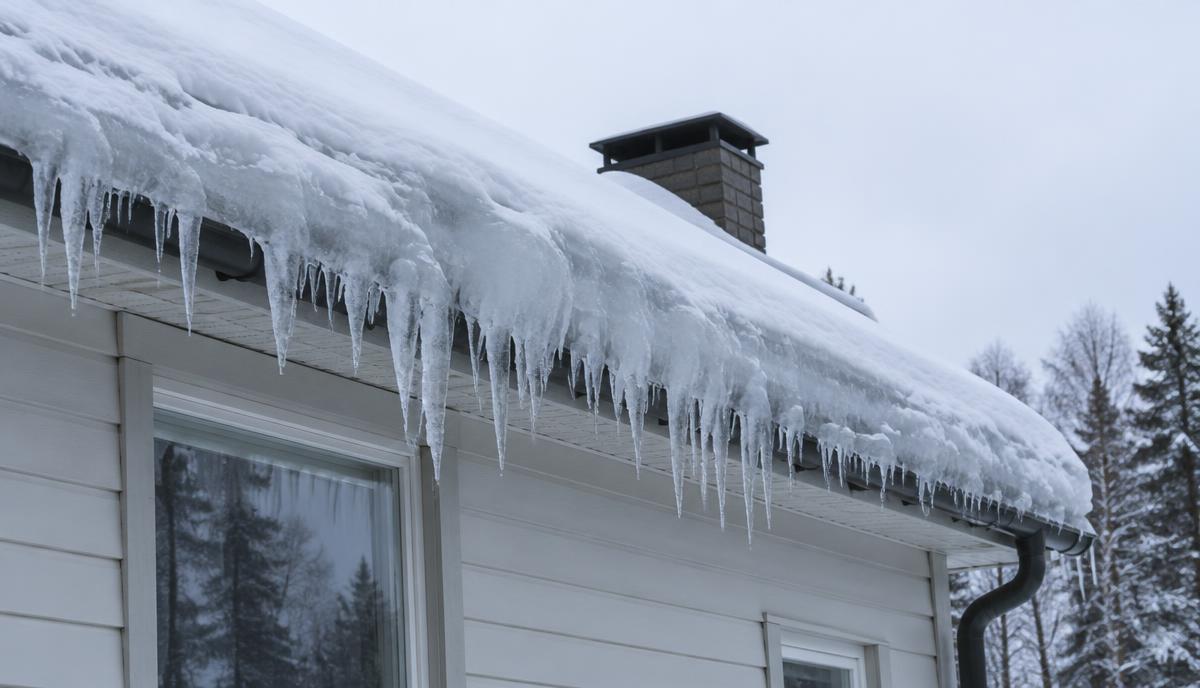
Roof ice melt products are often the first thing homeowners reach for when ice dams form. Some products can help create drainage channels through an existing ice dam, while others can damage roofing materials, gutters, plants, and surrounding surfaces.
Ice dams form when snow melts on a warmer section of the roof, flows toward the colder eaves, and freezes again. As more water freezes, the ice builds into a ridge that blocks drainage and can force water beneath the shingles.
The bigger issue is that roof ice melt only addresses the ice you can see. It does not necessarily tell you why the ice formed or how much snow and ice is weighing on the roof.
NevoSens works with building owners and facilities managers who need to understand what is actually happening on their roof during winter, rather than relying only on what can be seen from the ground.
This guide explains how roof ice melt products work, which options can damage roofing materials, how heated systems prevent ice dams, and why insulation, ventilation, and roof-load monitoring matter.
What Causes Ice Dams on a Roof?
Before using an ice melt product, it helps to understand why ice dams form in the first place. The process usually starts when heat escaping from inside the building warms part of the roof deck. Snow above the warmer section begins to melt, and the resulting water flows toward the colder eaves.
Because the eaves extend beyond the insulated part of the building, they remain colder. When the meltwater reaches this area, it can freeze and form an ice dam.
As the cycle continues, more water freezes behind the existing ice. This can prevent normal drainage and increase the risk of water backing up underneath roofing materials.
Heat Loss and Poor Attic Insulation
Gaps in attic insulation can allow warm air to enter the roof space. Even relatively small insulation problems can create warmer areas on the roof deck and trigger localised snowmelt.
The cycle continues when water flows toward the colder eaves and freezes again. Improving attic insulation helps reduce heat transfer into the roof space and can make the roof deck temperature more consistent.
Freeze-Thaw Cycles
Daytime warming followed by overnight freezing can accelerate ice dam formation. Each freeze-thaw cycle can add another layer of ice near the eaves. Wet, compacted snow can make the situation worse because it contains more water and can create greater loads as it accumulates.
Roof Pitch and Snow Accumulation
Roof pitch also affects how snow behaves. Low-pitched roofs generally retain snow for longer than steep roofs. When this is combined with poor attic ventilation, the conditions can become more favourable for ice dam formation.
Tree overhangs can also affect snow and ice conditions by shading sections of the roof and creating colder areas.
Types of Roof Ice Melt Products Compared
Not all roof ice melt products work in the same way. Different chemicals have different working temperature ranges and can affect roofing materials differently.
| Product type | Works down to | Risk level for roofs | Notes |
|---|---|---|---|
| Calcium chloride | -29°C / -20°F | Moderate | Commonly recommended for roof ice |
| Magnesium chloride | -15°C / 5°F | Lower | Gentler on vegetation and surfaces |
| Sodium chloride (rock salt) | -9°C / 15°F | High | Can damage shingles and corrode metal |
| Potassium chloride | -7°C / 20°F | Low | Safer for plants but less effective in cold |
The figures above describe the source article's approximate working ranges. Actual performance depends on the product formulation, application, ice conditions, and temperature.
Calcium Chloride Tablets and Pucks
Calcium chloride is one of the most commonly recommended options for roof ice melt. It generates heat as it dissolves, allowing it to remain effective at lower temperatures than many alternatives.
Calcium chloride pucks and tablets can be placed on ice dams or used in gutters to create channels through the ice. These channels allow backed-up water to drain.
The nylon stocking method is another approach. Calcium chloride is placed inside a stocking, the end is tied, and the filled stocking is positioned across the ice dam. As the chemical dissolves, it can create a channel through the ice.
This method also helps keep much of the chemical contained rather than spreading it directly across the roof.
Magnesium Chloride
Magnesium chloride is a milder alternative and can be less aggressive toward some roofing materials, vegetation, and pets.
Its main limitation is temperature. It can lose effectiveness as conditions become extremely cold, making it less useful during prolonged deep freezes.
Sodium Chloride: Avoid Direct Application on Roofs
Rock salt is inexpensive and widely available, but it can create problems when used directly on roofs. It works only at relatively warmer sub-freezing temperatures and can leave residue, corrode metal gutters and downspouts, and contribute to granular loss on asphalt shingles.
For driveways and paths, sodium chloride is commonly used. Direct application on roofing materials presents a different set of risks.
Potassium Chloride
Potassium chloride can be a lower-impact option around vegetation and pets, but it is less effective at lower temperatures.
It may work in areas with moderate winter temperatures, but it becomes less useful as temperatures fall below its effective range.
Is Roof Ice Melt Safe for Roofs?
The honest answer is that chemical roof ice melt products can carry risks. The severity depends on the chemical used, the quantity, how often it is applied, and the type and condition of the roofing material.
Granular Loss on Asphalt Shingles
Asphalt shingles have a surface layer of mineral granules that provides protection against UV exposure and contributes to fire resistance and appearance.
Repeated chemical exposure can accelerate granule loss. Once significant numbers of granules are lost, the protective surface of the shingle is compromised.
Chemical damage may also create problems with manufacturer warranties, depending on the product and warranty terms.
Corrosion on Metal Components
Gutters, downspouts, flashing, fasteners, and metal drip edges can be vulnerable to chloride-based chemicals.
Corrosion around fasteners is particularly important because these components help connect and secure parts of the roofing system.
Staining on Siding and Fascias
Meltwater from an ice dam can carry dissolved chemicals down the exterior of the building. On lighter-coloured siding and fascias, this runoff can leave visible staining.
Pet and Plant Concerns
Some ice melt chemicals can be harmful to pets if they ingest residue from treated surfaces or contaminated runoff reaches areas where pets walk.
Runoff can also affect nearby vegetation. Because of this, product labels and application instructions should always be followed carefully.
The U.S. Environmental Protection Agency notes that excessive salt use can contribute to environmental problems, including harm to aquatic life and water resources.
Chemical ice melt should therefore be treated as a targeted tool rather than a solution to apply broadly across the roof.
Roof Ice Melt Systems That Actually Work
Chemical products are mainly used after ice dams have already formed. Heated systems take a different approach by helping prevent ice from building up in the first place.
Heated De-Icing Cables
Roof heating cables are installed along eaves and inside gutters before winter. When temperatures fall, the cables warm the area enough to maintain drainage channels and reduce refreezing.
Self-regulating heat cables can adjust their output according to temperature, which can reduce energy use compared with constant-output systems.
Installation needs to cover the areas where melting and refreezing are most likely. Professional installation can help ensure that the cable pattern provides adequate coverage and does not leave sections where ice can continue forming.
Electric Roof Melt Mats
PVC de-icing mats sit directly on the roof surface and provide heat across a defined area. They can be useful on sections that regularly experience heavy snow accumulation, such as valleys or areas beneath higher roof sections.
Roof melt mats can also be combined with heating cables around gutters and drainage areas.
Flat Roof Considerations
Flat roofs present a different problem because water can remain on the roof when drainage points freeze. Heating drainage points and installing perimeter cables can help keep outlets open.
If drainage becomes blocked, ponding water can freeze and add additional weight to the structure. For commercial flat roofs on warehouses, retail buildings, and offices, the concern is not only ice dam formation. The combined weight of snow and ice can also become important.
A snow load sensor can provide real-time information about roof loading, something chemical and heated ice-melt systems cannot measure.
What Doesn't Work for Roof Ice Melt?
Some methods may appear practical but can damage roofing materials or create additional problems.
Chiseling or Hammering Ice
Using tools to break apart frozen ice can damage shingles or puncture roofing membranes. Impact can create cracks or openings through which water can enter.
Pressure Washing
High-pressure water can remove granules from asphalt shingles, damage flashing, and force water into joints or areas that were previously sealed. It is not a suitable general solution for removing ice dams from a roof.
DIY Solutions Such as Vinegar or Baking Soda
Household products such as vinegar and baking soda are not reliable solutions for removing substantial ice dams. They can also leave residue on roofing surfaces, and vinegar's acidity may affect some materials over time.
Rock Salt Spread Directly on the Roof
Rock salt can cause corrosion and roofing-material damage when applied directly to the roof. Its low cost does not make it a good choice for protecting roofing materials from ice dams.
The Real Fix: Attic Insulation and Ventilation
Chemical products and heating systems are management tools. They do not remove the underlying heat source that can contribute to ice dam formation.
Proper attic insulation helps keep heat inside the living space rather than allowing it to escape into the roof space. Adequate ventilation works alongside insulation to help maintain a more consistent roof-deck temperature.
Important components of a well-designed roof system can include soffit vents, ridge vents, and an ice and water shield underlayment at the eaves.
Together, these elements help control airflow and provide an additional layer of protection if water backs up beneath shingles.
Before winter weather arrives, it is also worth checking the roof for loose tiles, slates and flashing and clearing blocked guttering. The Met Office winter property guidance recommends these checks as part of preparing a property for winter weather.
When Ice Melt Is Not Enough: Snow Load Monitoring
Roof ice melt addresses ice dams and surface ice. It does not measure how much snow and ice is actually weighing on the roof. On a residential roof, regular snow removal and appropriate ice-dam management may be enough to manage the situation.
On a commercial flat roof covering thousands of square metres, the situation can be very different. Snow may accumulate across a large surface, while ice caused by blocked drainage can add additional weight.
There is no reliable way to determine the total roof load simply by looking at the roof from the ground. By the time a large ice dam becomes visible along the eaves, the roof may already be carrying a substantial amount of snow and ice.
This is where real-time roof monitoring can provide additional information. A sensor system can measure changes in roof loading throughout winter and provide alerts when the measured load approaches a defined threshold.
For facility managers responsible for large commercial roofs, measured load data can provide information that visual inspection alone cannot.
What Should You Do About an Existing Ice Dam?
If an ice dam has already formed, avoid using tools that can damage the roofing material. Do not climb onto an icy roof simply to inspect or remove the ice yourself. Working on a slippery roof creates a significant fall risk.
For smaller ice dams, a carefully selected and correctly applied ice melt product may help create a drainage channel.
For substantial ice dams, active leaks, or difficult-to-access roofs, professional removal is the safer option.
The long-term goal should also be to address the conditions that caused the ice dam, particularly insulation, ventilation, and recurring areas of snow accumulation.
Final Thoughts
Roof ice melt products can solve an immediate drainage problem, but they do not necessarily solve the underlying cause of ice dams.
Calcium chloride can help create drainage channels when used carefully and according to the product instructions. Heated cables and roof melt mats can help prevent ice from forming in vulnerable areas.
Better attic insulation and ventilation address the heat transfer that contributes to the melting-and-refreezing cycle. However, none of these approaches measures the actual amount of snow and ice sitting on the roof.
For residential homes, this gap may be manageable with regular inspection and appropriate snow removal. For commercial and industrial buildings, particularly large flat roofs, understanding the actual roof load can be much more important.
Roof ice melt treats the visible ice at the edge. Snow load monitoring provides information about what is happening across the roof structure.
Frequently asked questions
Which ice melt is best for roofs?
Calcium chloride is commonly used for roof ice melt because it remains effective at lower temperatures than many alternatives. When used, it should be applied carefully and according to the product instructions. Direct and repeated application across asphalt shingles should be avoided.
How do you get rid of ice dams on a roof fast?
A calcium chloride-filled nylon stocking placed across an ice dam can create a drainage channel through the ice. For significant ice dams or active leaks, professional steam removal is a safer option than climbing onto the roof or breaking the ice with tools.
What are the disadvantages of roof melt systems?
Heated cable systems require installation and ongoing energy use. Chemical ice melt products can affect metal components, roofing materials, plants, and pets if they are misused. Neither approach addresses underlying problems such as inadequate attic insulation or ventilation.
Is roof melt safe for shingles?
Small, targeted use of calcium chloride can reduce direct contact with shingles when used with a suitable application method. However, repeated direct chemical application can contribute to shingle damage and may affect warranty coverage. Always follow the roofing manufacturer's and product manufacturer's instructions.
What melts ice on a roof immediately?
No roof ice melt method is completely risk-free or instant at large scale. Calcium chloride can work faster than some alternatives because it releases heat as it dissolves. For significant ice dams, professional steam removal is a safer mechanical approach.
Can ice dams cause roof collapse?
Ice dams themselves are not usually the sole cause of roof collapse. However, the snow and ice that accumulate on a roof can add substantial weight to the structure. This is particularly important on flat and low-pitched roofs with significant snow accumulation.
How can you prevent ice dams on a roof?
The most important long-term measures are proper attic insulation, adequate ventilation, and correct roof and drainage design. Heating cables can also help keep vulnerable areas clear during winter.
Can roof ice melt damage gutters?
Yes. Chloride-based ice melt products can contribute to corrosion of metal gutters, downspouts, flashing, and other metal components. Application should therefore be targeted and carried out according to the product instructions.
How can roof snow and ice load be monitored?
A sensor-based monitoring system can continuously measure changes in roof loading without requiring someone to climb onto the roof after every snowfall. This can be particularly useful for large commercial and industrial buildings.
Next step
Want to see how roof load monitoring would work on your buildings?
We review your properties, suggest sensor placement and show you how the portal looks in operation. Free of charge and without commitment.