NevoWeight Snow Sensor
Snow Sensor for Roofs: Real-Time Protection Against Collapse
A snow sensor is a device that measures the actual weight of accumulated snow on a roof and sends automatic alerts when load levels approach structural limits. The NevoSens snow sensor uses digital load cells mounted directly on the outer roof surface to deliver real-time data, 24 hours a day, without any manual inspection.
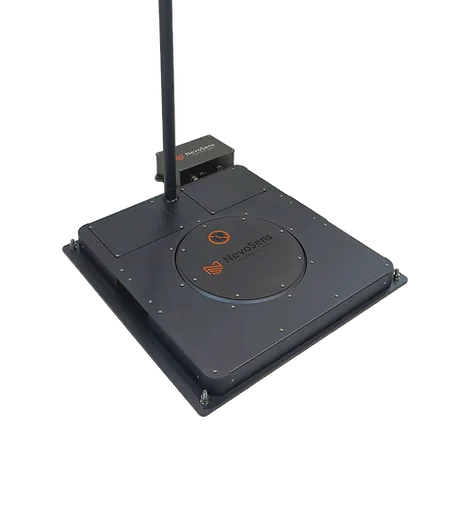
A roof can collapse under snow load without visible warning. Heavy snowfall raises one critical question for building owners and facility managers: is the roof still safe? The NevoWeight snow sensor by NevoSens measures the actual weight of accumulated snow using precision digital load cells, not just snow depth, continuously monitoring roof snow load and triggering automatic alerts before dangerous load limits are reached.
Why isn't a snow depth sensor enough?
A snow depth sensor only tells you how much snow has fallen, not how heavy it is, and that creates a real safety gap, since snow density changes constantly.
For example, a 25 cm layer of dry snow may apply a load of around 10 kg/m², while the same layer of wet, compacted snow can exceed 100 kg/m². Depth-based systems can't catch this difference.
Only a weight-based snow sensor can give you an accurate read on structural risk. The NevoWeight system measures load directly, making it far more reliable for roof safety.
Snow Depth Sensor vs. NevoSens Snow Sensor
| Feature | Snow Depth Sensor | NevoSens Snow Sensor |
|---|---|---|
| Measures | Snow depth only | Actual snow weight |
| Accuracy for load | Low (assumes density) | High (direct measurement) |
| Wet snow accuracy | Unreliable | Fully accurate |
| Automatic alerts | Not typically | Yes, preset thresholds |
| Remote access | No | Web and mobile app |
| Suitable for roof safety | No | Yes |
What Is the NevoWeight Snow Sensor by NevoSens?
The NevoWeight Snow Sensor is a roof-mounted structural load monitoring device designed for large buildings such as warehouses, factories, logistics centers, retail buildings, schools, and sports halls.
It continuously measures snow load using calibrated digital load cells and delivers real-time data for safety decision-making. Unlike snowfall sensors or depth sensors, NevoWeight focuses on structural load, not precipitation measurement, complementing NevoDef roof deflection monitoring for a complete structural safety picture.

How the NevoSens Snow Sensor Works
Digital load cells mount directly on the outer roof surface and continuously measure compressive force from accumulated snow. Data is transmitted in real time to the NevoNode platform.
- Measure: load cells continuously track compressive force
- Transmit: data sent in real time to NevoNode
- Alert: automatic notification when load nears a preset threshold
- Act: facility teams remove snow before it becomes a risk
Key Features of the NevoWeight Snow Sensor
Direct measurement of snow load using digital load cells
Real-time monitoring via NevoNode cloud platform
Accurate performance in dry, wet, compacted, and drifting snow
Custom alarm thresholds based on structural design limits
Automatic alerts before dangerous load levels are reached
Remote access through web dashboard and mobile app
Integration with the NevoSens ecosystem (NevoDef, NevoMesh, NevoNode)
Continuous 24/7 winter monitoring
What the Snow Sensor Protects
Structural safety
Alerts enable snow removal before dangerous loads build up.
Targeted removal
Send crews only where needed, reducing cost and roof wear.
Insurance & compliance
Logged data supports insurers and regulators.
Remote visibility
Monitor roof conditions without risky inspections.
Extended roof lifespan
Reduces repeated structural stress.
Technical Specifications
NevoSens Smart Roof Monitoring Ecosystem
The NevoWeight snow sensor is the core measurement device within the NevoSens roof monitoring solution.
NevoDef
Monitors roof deflection with laser precision, helping identify structural movement caused by snow loads.
NevoDefX
Monitors structural tilt and angular displacement in roof beams and trusses, detecting early rotational movement caused by snow loads.
NevoNode
Collects and processes sensor data while managing alerts and system communication.
NevoMesh
Provides secure cloud connectivity, letting you monitor live conditions and historical trends from any location.
Why Choose NevoWeight?
Unlike conventional snow depth sensors, NevoWeight measures actual structural load rather than estimating it.
- Direct measurement instead of calculations based on snow depth
- Reliable performance in dry, wet, compacted, or drifting snow
- Continuous monitoring throughout the winter season
- Automatic alerts before structural limits are exceeded
- Easy integration with existing building management systems
- Scalable solution for single buildings or large property portfolios
Ready to Protect Your Building From Roof Collapse?
Avoid costly roof failure risks before the next snowfall season begins. The NevoWeight Snow Sensor gives facility managers that answer in real time, 24 hours a day, as part of the complete NevoSens roof monitoring system.