
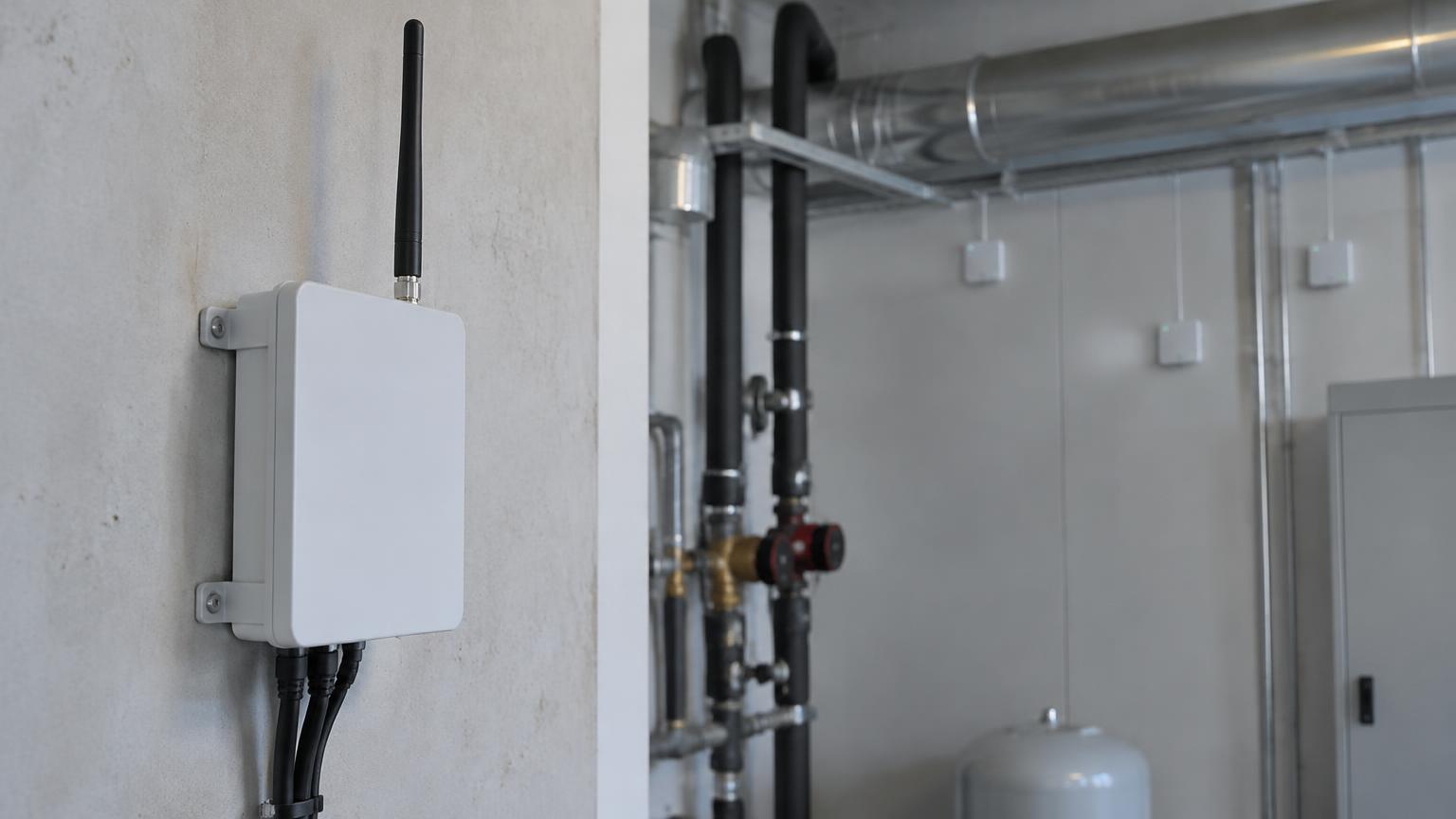
A LoRa gateway is a device that receives wireless data from compatible Internet of Things (IoT) sensors and forwards it to a network server or cloud platform. It acts as a bridge between sensors installed in buildings, industrial facilities, and outdoor environments and the software used to monitor their data.
LoRa gateways are widely used in applications that require long-range wireless communication, low power consumption, and reliable collection of sensor measurements. Common examples include building monitoring, industrial automation, environmental sensing, agriculture, and energy management.
For businesses that need remote access to sensor data, a gateway can connect field devices to a central monitoring system. The NevoSens LoRa Gateway connects compatible sensors and Modbus devices to the NevoMesh cloud platform, supporting remote monitoring and data collection.
What Is the Difference Between LoRa and LoRaWAN?
LoRa and LoRaWAN are related technologies, but they perform different functions within a wireless IoT network.
LoRa is a radio modulation technology that allows devices to transmit small amounts of data over long distances while using relatively little power.
LoRaWAN is a communication protocol that defines how compatible devices communicate with gateways and network servers. It also specifies network procedures and security mechanisms.
The main differences are:
| Feature | LoRa | LoRaWAN |
|---|---|---|
| Technology type | Radio modulation technology | Communication protocol |
| Main function | Transmits wireless signals | Organizes communication within a network |
| Typical role | Connects sensors wirelessly | Manages communication between devices and network infrastructure |
| Common applications | Long-range, low-power communication | IoT monitoring and sensor networks |
A LoRa gateway receives radio packets from compatible devices. In a LoRaWAN network, it forwards those packets to a network server through an IP-based connection.
The network server handles network-level functions and helps route data to the appropriate application. The application platform then processes the information and makes it available to users.
For a technical explanation of LoRaWAN architecture, see the LoRaWAN architecture documentation from The Things Industries.
How Does a LoRa Gateway Work?
A LoRa gateway connects wireless sensors with a network server or cloud platform. Although the exact setup depends on the equipment, the communication process generally follows these steps.
1. Sensors Collect Measurements
Sensors measure specific conditions, such as temperature, humidity, snow load, energy consumption, or structural movement. They convert these measurements into data that can be transmitted wirelessly.
2. Sensors Send Wireless Data
The sensors transmit data packets using LoRa radio technology. Depending on the device configuration, transmissions may happen at regular intervals or when a specific event occurs.
For example, a sensor may send measurements periodically so that users can track changes over time.
3. The Gateway Receives the Data
The gateway listens for compatible radio transmissions within its coverage area. Multi-channel gateways can receive messages across multiple supported radio channels and data rates.
If more than one gateway receives the same transmission, the network server can handle duplicate copies of the message.
4. The Gateway Forwards the Packets
After receiving a packet, the gateway forwards it to the network server through a supported backhaul connection. Depending on the device, this connection may use Ethernet, cellular connectivity, or another supported network interface.
5. The Network Server Processes the Messages
In a LoRaWAN deployment, the network server manages network communication, processes incoming messages, and routes the relevant data to the application layer.
The gateway primarily handles packet reception and forwarding. It does not necessarily process or interpret the application data itself.
6. The Cloud Platform Displays the Information
The application or cloud platform can display sensor readings, store historical data, create reports, and generate alerts when configured conditions are met.
This process allows users to monitor remote locations without manually collecting measurements from every sensor.
What Are the Main Components of a LoRaWAN System?
A complete LoRaWAN system consists of several components that work together.
- End devices: Sensors or actuators that collect measurements or perform specific actions.
- LoRa gateway: Receives wireless packets from compatible devices and forwards them to the network server.
- Network server: Handles network-level functions and manages communication within the LoRaWAN network.
- Application platform: Processes application data and presents useful information through dashboards, reports, or alerts.
- Backhaul connection: Connects the gateway to the network server using a supported IP network.
Understanding these components is important when planning an IoT deployment. A gateway is only one part of the system, and its capabilities should match the requirements of the sensors, network server, and monitoring platform.
How Far Can a LoRa Gateway Reach?
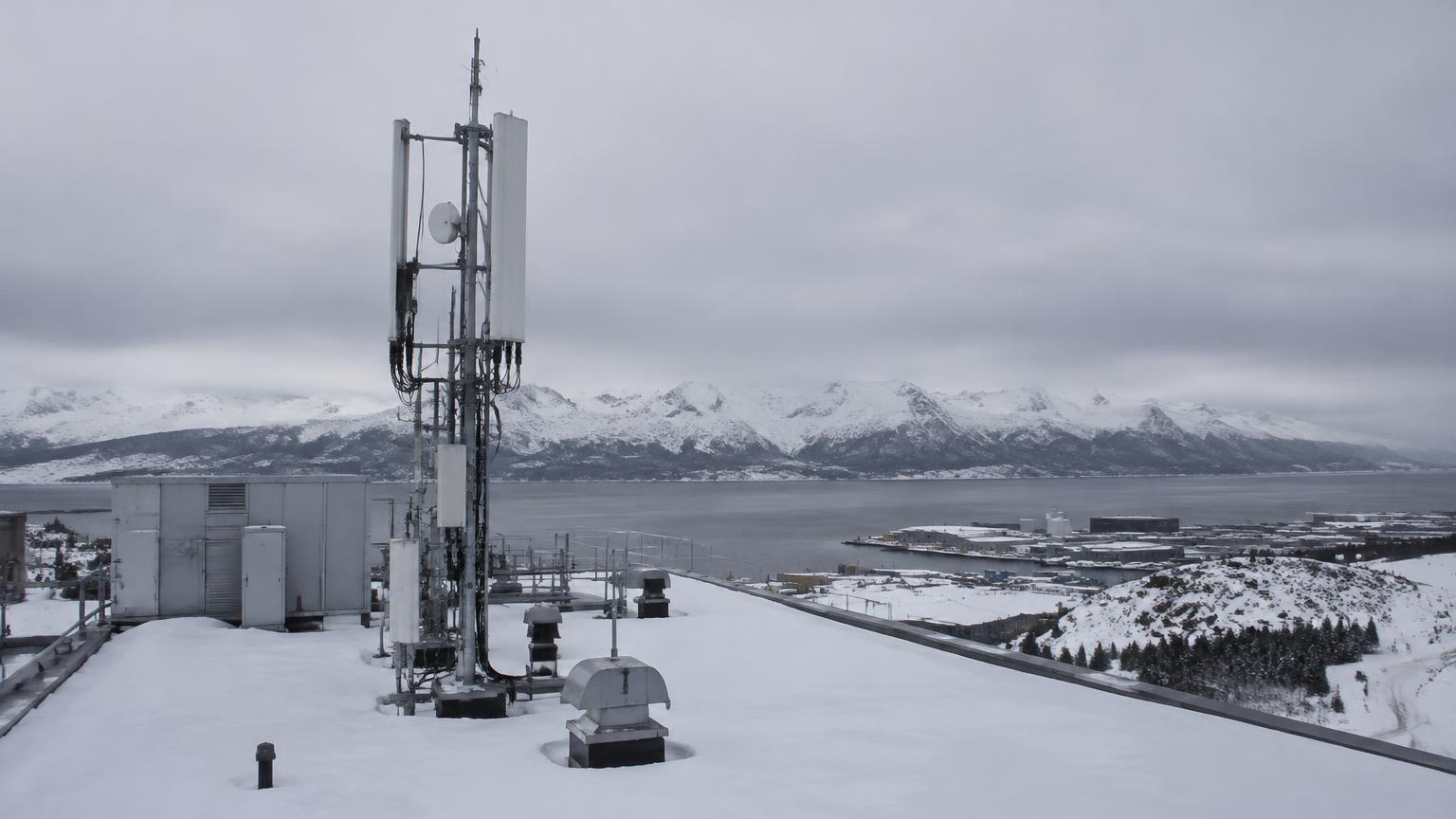
The range of a LoRa gateway depends on the environment, antenna placement, radio settings, and physical obstacles. There is no single maximum distance that applies to every installation.
Under favorable outdoor conditions, LoRa communication can reach several kilometers. In suitable open environments, longer distances may be possible. In urban areas and inside buildings, the range can be significantly shorter.
Several factors influence gateway range:
- Antenna position: Height and placement can affect signal reception.
- Physical obstacles: Walls, concrete floors, metal structures, and buildings may weaken radio signals.
- Terrain: Hills, vegetation, and other geographical features can affect coverage.
- Radio configuration: Data rate, bandwidth, and spreading factor influence transmission performance.
- Interference: Other radio activity may affect packet reception.
- Installation conditions: Indoor and outdoor environments create different challenges.
A higher spreading factor can help a receiver detect weaker signals, but it generally reduces data rate and increases transmission time.
For this reason, range estimates should be treated as guidelines rather than guarantees. Testing the radio coverage at the actual installation site is the best way to determine whether the gateway can reliably reach the required sensors.
How Many Sensors Can One LoRa Gateway Support?
A multi-channel LoRaWAN gateway can receive messages from many compatible sensors. However, the practical number of devices depends on the gateway specifications and the overall network configuration.
Important factors include:
- Number of supported radio channels.
- Frequency of sensor transmissions.
- Size of the transmitted data packets.
- Signal quality and interference.
- Number of devices sharing the network.
- Network configuration and downlink requirements.
Sensors that send small messages occasionally generally place less demand on network capacity than devices that transmit frequently.
When planning a deployment, it is better to calculate the expected communication load than to rely only on a manufacturer's advertised device count. The gateway, network server, radio conditions, and sensor settings all influence the system's capacity.
Indoor vs. Outdoor LoRa Gateways
Choosing between an indoor and outdoor gateway depends on the installation environment and the location of the sensors.
Indoor LoRa Gateways
Indoor gateways are commonly used in offices, warehouses, technical rooms, and industrial buildings.
Potential advantages include:
- Convenient access to power and network connections.
- Easier maintenance when the device is installed in an accessible location.
- Protection from direct exposure to weather.
- Integration with existing building infrastructure.
However, concrete walls, metal structures, and multiple floors can weaken radio signals. Gateway placement should therefore be planned around sensor locations and the building layout.
Outdoor LoRa Gateways
Outdoor gateways may be suitable for large sites, external infrastructure, and sensor networks spread across open areas.
Before choosing an outdoor model, check its enclosure rating, operating temperature range, antenna requirements, power supply, and network connectivity.
An outdoor installation may use Ethernet or cellular connectivity, depending on the gateway model and the available infrastructure.
Neither type is automatically better. The right choice depends on the required coverage, environmental conditions, and documented specifications of the equipment.
Public vs. Private LoRaWAN Networks
A LoRaWAN deployment can use an existing public network or a privately managed network.
Public LoRaWAN Networks
Public networks use infrastructure operated by a third-party provider. They may reduce the amount of equipment an organization needs to install and maintain.
Before choosing this option, verify that coverage is available at the intended location and that the provider's services meet the project's requirements.
Private LoRaWAN Networks
A private network is deployed or managed by an organization for its own applications. It provides greater control over gateway placement, network configuration, and integration with internal systems.
Private networks can be useful for industrial sites, large buildings, and locations where public coverage is limited. However, they also require suitable maintenance, security management, and network monitoring.
The choice between public and private infrastructure should consider coverage, operating costs, data requirements, technical support, and the organization's ability to manage the network.
What Are LoRa Gateways Used For?
LoRa gateways are useful in applications where wireless sensors need to transmit small amounts of data over long distances without requiring a separate wired connection for every device.
Building and Structural Monitoring
Building monitoring systems can use compatible sensors to measure temperature, humidity, snow load, and structural movement.
These measurements help facility managers observe changing conditions and make informed decisions. Depending on the monitoring system, alerts can be configured to notify users when measurements reach specified thresholds.
Industrial Monitoring
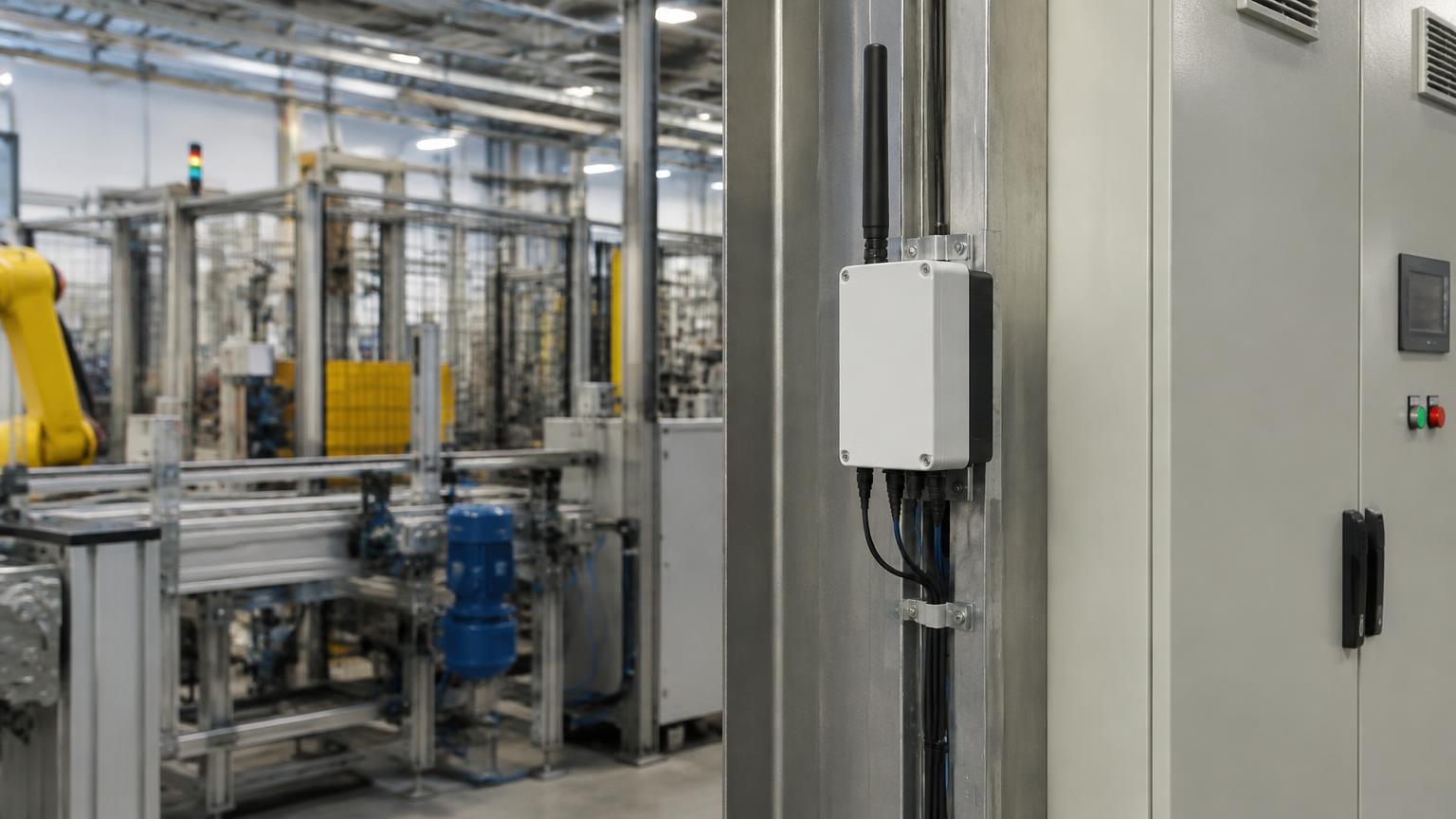
Industrial facilities can use LoRa-connected sensors to monitor environmental conditions, equipment, and selected operational parameters.
LoRaWAN may be suitable when the application requires low-power communication and relatively small data packets. Applications requiring high data throughput or guaranteed very low latency may need a different technology.
Energy and Utility Monitoring
Compatible meters can transmit electricity, water, or gas consumption readings to a monitoring platform. The exact integration depends on the meter's communication interface and the supported system architecture.
Agriculture and Environmental Monitoring
Wireless sensors can collect measurements related to soil conditions, temperature, humidity, and other environmental parameters across fields and remote sites.
Smart Cities and Infrastructure
LoRaWAN networks can support applications such as environmental sensing, parking monitoring, waste management, and selected infrastructure monitoring tasks.
The best use case is one where long-range communication, low power consumption, and the transmission of small data packets match the application's requirements.
Is a LoRa Gateway Secure?
Security depends on the communication protocol, device configuration, network infrastructure, and connected applications.
LoRaWAN includes security mechanisms based on cryptographic keys and AES-128. Its architecture separates network-related security functions from the protection of application data.
In a typical LoRaWAN system, the gateway forwards radio packets to the network server. It does not automatically need to decrypt application payloads to perform this function.
Organizations should also follow good security practices:
- Configure and register devices correctly.
- Protect cryptographic keys and account credentials.
- Restrict access to gateway administration interfaces.
- Keep supported firmware and software up to date.
- Secure connections to network servers and cloud platforms.
- Monitor connectivity and investigate unexpected interruptions.
Encryption is an important part of security, but it does not replace secure configuration, access control, and ongoing maintenance.
Can a LoRa Gateway Work with Modbus?
Some gateways and monitoring systems support Modbus integration, allowing compatible industrial equipment to exchange measurement data with a central platform.
Modbus RTU commonly uses an RS-485 serial connection. A compatible device can read measurements from supported equipment and make them available to another system.
In an integrated monitoring solution, data may then be transmitted through LoRa, LoRaWAN, or another supported communication method, depending on the system architecture.
However, Modbus support is not a standard feature of every LoRa gateway. Before installation, check the supported interfaces, Modbus variants, device compatibility, and data integration requirements.
What Should You Consider When Choosing a LoRa Gateway?
The right gateway depends on the sensors, installation environment, coverage requirements, and monitoring application.
Use this checklist when comparing devices:
- Compatibility: Does the gateway support the required radio technology, protocol, and sensors?
- Coverage: Can it receive signals from all required sensor locations?
- Capacity: How many devices will transmit, and how frequently will they send data?
- Connectivity: Does the installation require Ethernet, cellular connectivity, or another supported backhaul connection?
- Environment: Is the device suitable for indoor or outdoor use and the expected operating temperatures?
- Integration: Does the system support the required interfaces, such as Modbus, and the intended cloud platform?
- Security: Are access control, device management, and software updates adequately supported?
- Maintenance: How will the system handle communication failures, troubleshooting, and ongoing monitoring?
For building and structural monitoring, it is also important to understand how the complete system handles missing data, communication interruptions, and alert thresholds.
Selecting a gateway based on documented specifications and actual installation requirements is more reliable than choosing a device based on range claims alone.
How Does NevoSens Support Building Monitoring?
NevoSens provides monitoring solutions designed for building and industrial applications. Its LoRa Gateway connects compatible sensors and Modbus devices to the NevoMesh cloud platform.
Depending on the system configuration, this setup can help users access sensor measurements remotely, review data, and receive alerts when monitored values reach configured thresholds.
For facility managers and building operators, remote access can make it easier to monitor conditions across a building or multiple locations without visiting each sensor installation.
For building owners and facility managers, a roof monitoring system can help track important conditions and access sensor data remotely. The NevoSens LoRa Gateway connects compatible sensors and Modbus devices to the NevoMesh cloud platform, supporting remote monitoring and data collection.
Conclusion
A LoRa gateway connects wireless IoT sensors with a network server or cloud platform. It enables remote data collection across buildings, industrial facilities, and outdoor environments while supporting low-power, long-range wireless communication.
The right gateway depends on sensor compatibility, range, network capacity, connectivity, security, and installation conditions. Understanding these requirements helps organizations select equipment that fits their monitoring needs.
For building and industrial monitoring, the NevoSens LoRa Gateway connects compatible sensors and Modbus devices to the NevoMesh cloud platform, supporting remote access to sensor data and configured monitoring alerts.
Frequently Asked Questions About LoRa Gateways
What is a LoRa gateway in simple terms?
A LoRa gateway receives wireless messages from compatible sensors and forwards them to a network server or cloud platform. It connects wireless devices with the systems used to monitor their data.
How does a LoRa gateway work?
It receives radio packets from sensors and forwards them through a supported network connection. In a LoRaWAN deployment, the network server handles network-level functions and routes data to the relevant application.
What is the difference between a LoRa gateway and a LoRa sensor?
A sensor measures a condition, such as temperature, humidity, or snow load. A gateway receives wireless messages from compatible sensors and forwards them to the network infrastructure.
How far can a LoRa gateway reach?
The range depends on antenna placement, terrain, buildings, radio settings, and interference. Several kilometers may be possible under favorable outdoor conditions, but actual coverage should be tested at the installation site.
How many sensors can one LoRa gateway support?
A gateway can receive messages from many compatible sensors. The practical capacity depends on the gateway's specifications, transmission frequency, packet size, radio conditions, and network configuration.
Does a LoRa gateway need an internet connection?
A LoRaWAN gateway generally needs an IP-based backhaul connection to communicate with its network server. Depending on the device, this may use Ethernet, cellular connectivity, or another supported network connection.
Is LoRaWAN suitable for industrial monitoring?
LoRaWAN can be suitable for industrial monitoring when applications require low-power communication and relatively small data packets. Its suitability depends on the required data rate, latency, reliability, and environmental conditions.
Is LoRaWAN secure?
LoRaWAN includes security mechanisms such as AES-128-based cryptography. Overall security also depends on correct device provisioning, key management, access controls, software updates, and the security of the connected infrastructure.
Can a LoRa gateway connect to Modbus devices?
Some gateways and monitoring systems support Modbus integration. Check the specific product's supported Modbus variant, interface, and compatibility before choosing a solution.
What is the difference between an indoor and outdoor LoRa gateway?
Indoor gateways are designed for suitable indoor environments, while outdoor gateways need to meet the environmental requirements of external installations. The correct option depends on sensor coverage, mounting location, weather exposure, and device specifications.
Next step
Want to see how roof load monitoring would work on your buildings?
We review your properties, suggest sensor placement and show you how the portal looks in operation. Free of charge and without commitment.