
Do snow guards prevent roof collapse?
Snow sliding off a metal roof sounds harmless until it takes your gutters with it, or lands on someone walking below. Every winter, property owners across the UK and Nordic countries face this exact problem. Snow guards are the go-to solution, but a bigger question often goes unanswered: do they actually stop a roof from collapsing under heavy snow?
No, Snow guards do not prevent roof collapse. They stop snow from sliding off the roof, but they do not reduce the weight sitting on the roof. If heavy snow keeps building up, the roof can still become overloaded. This guide explains when snow guards are enough and when you need extra protection.
Most modern roofs are designed to meet local building standards for snow loads. However, unusually heavy snowfall can exceed those limits, which is why regular inspections are important during winter.
What Actually Causes a Metal Roof to Collapse?
Roof collapse is not usually caused by snow sliding off. It is caused by snow staying on.
When snow builds up faster than it melts, the weight on the roof structure keeps growing. Most residential metal roofs are designed to handle a certain snow load, measured in kilograms per square metre. Once that limit is crossed, the structural risk becomes real. A few factors speed up the problem:
- A low-pitched roof traps more snow than a steep one
- Wet, heavy snow weighs far more than fresh powder
- When snow melts during the day and freezes again at night, a layer of ice forms on the roof. This adds even more weight alongside the snow.
- Large flat roofs on warehouses, sports halls, and shopping centres carry the highest risk
What Are Snow Guards and How Do They Work?
Metal roofs do not absorb moisture, which is one of their strengths. But that same smooth surface means snow does not bond to it. It either slides off fast or compacts into dense, heavy sheets.
Many homeowners believe snow guards reduce the weight on the roof. They do not. Their main purpose is to stop large sheets of snow from sliding off unexpectedly while allowing the snow to melt gradually.
Snow guards create small barriers that slow down snow movement on the roof. Instead of a large sheet of snow sliding off at once, the snow melts gradually and drains away as water through the gutters.
Building owners who manage larger properties often need more than basic snow retention. NevoSens provides snow monitoring solutions that help commercial and industrial buildings improve winter roof safety and reduce weather related risks.
Do Snow Guards Actually Prevent Roof Collapse?
No. Snow guards are not designed to prevent roof collapse. They reduce the risk of snow sliding off the roof, but they do not reduce the total weight sitting on the roof structure.
Imagine two similar buildings after a heavy snowfall. One has snow guards, and the other does not. The building without snow guards may experience a sudden snow slide, while the other keeps the snow in place. However, both roofs still carry the same snow load. This is why snow guards improve safety but do not reduce structural weight.
What snow guards do well
- Stop large snow sheets from falling onto people or property below
- Reduce gutter damage caused by sudden snow dumps
- Help prevent ice dams from forming at the roof edge
- Reduce liability risk for building owners
What snow guards cannot do
There is one important point to remember. Snow guards keep snow on the roof for longer, so the total roof load may increase until the snow melts naturally. On a well-designed residential roof, this is rarely a problem. However, larger commercial and industrial buildings often need more than a snow retention system. A snow load sensor can continuously monitor roof load and provide early warnings before the weight reaches unsafe levels.
- Reduce the total weight of snow sitting on your roof
- Alert you when snow load is approaching a dangerous level
- Replace a proper structural assessment
- Protect a roof that was not built to handle your local snow load
What Types of Snow Guards Work Best on Metal Roofs?
Individual Snow Guards (Snow Birds and Snow Cleats) are small units installed across the roof to slow down snow movement. Instead of allowing a large sheet of snow to slide off at once, they create small stopping points that help keep the snow in place until it melts naturally.
Small profile guards have a face area under four square inches. They suit roofs with lighter snow loads and gentler pitches. Large profile guards offer a bigger barrier and work better where snow is heavier or the roof is steeper.
They come in two fixing styles. Adhesive-fixed guards use industrial bonding compounds and suit roofs where drilling is not an option. Mechanically fixed guards use screws through the panel into the decking below and are the stronger, more reliable choice for most roofs.
Bar-Style Snow Guards
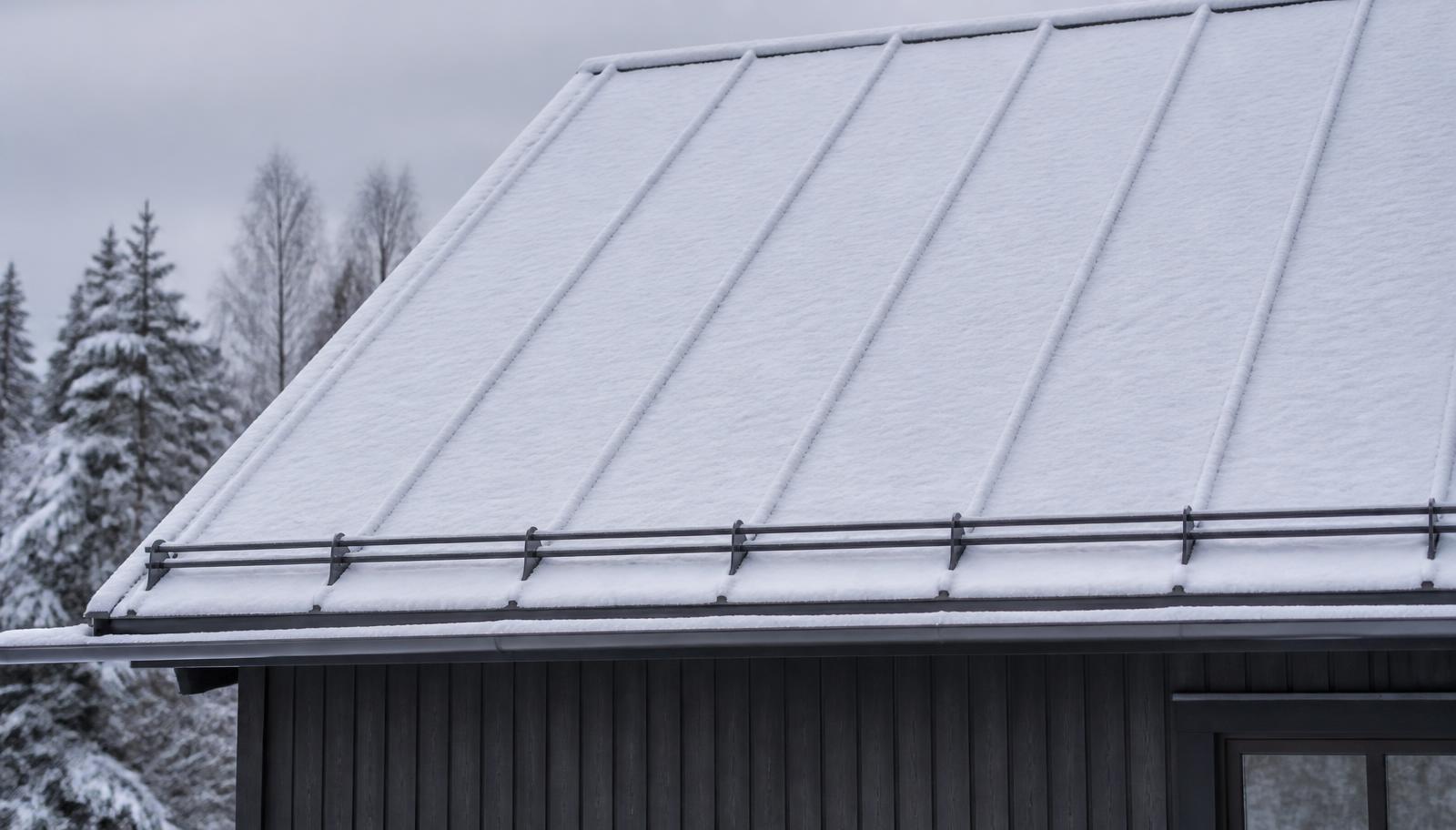
A bar-style system runs a continuous metal bar horizontally across the roof, supported by brackets fixed to the seams or screwed into the panel. The bar acts as a solid barrier that holds back the entire snow blanket above it.
These suit standing seam metal roofs particularly well because the brackets can clamp directly to the seam without piercing the panel. That means no holes, no leak risk, and no warranty concerns. Systems like ColorGard are a common example of this bar-style approach.
Bar systems are cleaner looking than individual guards and often only require one or two rows depending on roof length and snow load.
Fence-Style Snow Guard Systems
Fence-style systems, sometimes called snow fence systems, are similar to bar systems but use two or more horizontal tubes arranged like a split rail fence. They are common on custom homes and alpine properties where snow loads regularly exceed 75 pounds per square foot.
These systems provide the best snow retention and are suitable for almost all common metal roof types, including corrugated, screw-fixed, and standing seam roofs.
Snow Guards or Snow Rails: Which One Should You Choose?
Both terms are used interchangeably, but they refer to slightly different things. Snow guards usually mean the individual pad-style units. Snow rails or snow bars usually refer to the continuous bar or fence systems.
| Factor | Individual Snow Guards | Snow Rails or Bar Systems |
|---|---|---|
| Cost | Lower upfront cost | Higher upfront cost |
| Visibility on roof | Less visible | More visible |
| Snow load capacity | Moderate | High |
| Best roof pitch | Low to moderate | Moderate to steep |
| Installation | Simpler | Requires more planning |
| Best for | Residential roofs | Commercial and heavy snow areas |
How Do You Install Snow Guards on a Metal Roof?
For most homes with moderate winter snowfall, individual snow guards are sufficient. For larger roofs, steeper pitches, or regions with heavy seasonal snow, a rail or bar system will perform better over time.
Standing Seam Metal Roof: Clamp Method
Standing seam roofs offer the cleanest installation option. Brackets clamp directly onto the raised seams using a pinch bolt tightened with a torque wrench. No holes are drilled into the panel itself, which protects your roof warranty and eliminates any leak risk.
Mark the installation points carefully and keep the brackets aligned in a straight line. Always follow the manufacturer's installation instructions to ensure the system works correctly.
Metal Shingles: Screw Method
Metal shingles are trickier. Clamp systems do not work here, so screws are the primary fixing method.
Most metal shingles require screw fixing with proper waterproof sealing. Always follow the roof manufacturer's recommendations to avoid leaks and protect your roof warranty.
Check with your roof manufacturer before drilling. Some 50-year metal roof warranties have terms around third-party fixings, and you want to confirm your method does not void that cover.
Adhesive Versus Mechanical Fixing
Adhesive-fixed guards are quick to install and avoid any roof penetration. Modern construction adhesives are strong, but the concern with adhesive fixing is what happens under a serious snow load. If the guard is not bonded to something structurally solid beneath the panel, the panel itself can flex or deform when a heavy load hits.
Mechanical fixing is usually the better option for areas with heavy snowfall because it provides a stronger and more secure installation.
DIY Versus Professional Installation
Individual snow guards on a low-pitch roof are a manageable DIY project if you are comfortable working at height and follow the manufacturer layout guide carefully. Bar and rail systems are more complex and benefit from professional installation, particularly the layout planning which affects how well the system performs.
A professional will also check whether your roof structure can take the additional fixing points without issue.
How Many Snow Guards Do You Actually Need?
The number depends on three things: roof pitch, roof length from eave to ridge, and your local ground snow load.
Steeper roofs need more guards because snow moves faster down the slope. Longer roof runs need more rows to catch snow at multiple points. Higher snow load regions need denser coverage.
Most residential roofs only need one row near the eaves. Larger roofs or areas with heavier snowfall usually need extra rows. Add a second row midway up for longer roof planes or heavier snow regions. For very steep roofs or alpine locations, three or more rows may be needed.
Your snow guard manufacturer will usually provide a free layout design if you supply your roof dimensions and local snow load data. This is worth doing rather than guessing.
Which Material Should You Choose for Snow Guards?
Avoid cheap plastic guards for anything other than very light snow conditions. They crack in freeze-thaw cycles and need replacing far sooner than metal alternatives.
| Material | Durability | Rust Resistance | Cost | Notes |
|---|---|---|---|---|
| Aluminium | High | Excellent | Mid-range | Most common choice |
| Stainless Steel | Very High | Excellent | Higher | Best for coastal areas |
| Copper | Very High | Excellent | Premium | Develops patina, suits traditional roofs |
| Polycarbonate | Moderate | N/A | Low | Clear, less visible, suits lighter loads |
What Does It Cost to Install Snow Guards on a Metal Roof?
Individual snow guards typically cost between GBP 3 and GBP 8 per unit, depending on material and profile size. A bar or rail system runs considerably more, often GBP 20 to GBP 30 per linear foot of roof edge, plus brackets and labour.
Professional installation adds GBP 50 to GBP 100 per hour depending on your location and roof accessibility.
Although snow guards require an upfront investment, repairing damaged gutters, vehicles, or property often costs much more. They can also help reduce the risk of costly liability claims caused by falling snow or ice.
How Do You Maintain Snow Guards After Installation?
Check your snow guards each autumn before winter arrives. Look for any units that have shifted, loosened, or corroded. After a major storm, do a visual check from the ground to confirm nothing has been displaced by an unusually heavy load.
For painted or coated metal guards, touch up any chips to prevent rust spreading. Check that any sealant around screw fixings is still intact and not cracking. A cracked seal around a fastener is a future leak.
Most quality metal snow guards last 10 to 15 years. Polycarbonate units may need replacing sooner in harsh climates. Replace any unit showing signs of metal fatigue before the next winter season rather than waiting for it to fail.
When Are Snow Guards Not Enough?
For a standard residential roof, snow guards combined with a well-designed structure handle winter safely. But for commercial and industrial buildings, the picture is different.
A warehouse roof, sports hall, or shopping centre carries far more surface area and far more potential snow load than a house. If snow accumulates faster than it melts on a large flat or low-pitch metal roof, the structural load can reach dangerous levels without any visible warning sign from the ground.
Snow guards on a roof like this manage the slide risk but do nothing about the weight risk.
Large commercial roofs need more than snow guards. Building owners also need to know how much weight is sitting on the roof. A snow load monitoring system measures the roof load throughout winter and provides early alerts before the weight reaches unsafe levels. This gives facility managers enough time to take action and reduce structural risk.
Snow guards reduce the risk of falling snow, but they do not tell you how much weight is sitting on the roof. Regular inspections and roof load monitoring are the best way to reduce structural risk during winter.
Final Thoughts
Snow guards are a practical and cost-effective way to manage the safety risks that come with metal roofs in winter. They stop dangerous snow slides, protect gutters, reduce liability, and give occupants and pedestrians below a much safer environment.
But they are one part of a complete winter roof strategy, not the whole answer. For residential buildings, a well-chosen and properly installed snow guard system covers most of what you need. For commercial and industrial buildings, combining snow retention with live snow load data gives you the full picture.
Using the right snow retention system together with regular roof inspections and snow load monitoring helps keep both your building and the people around it safe throughout winter.
Frequently asked questions
Do snow guards on metal roofs actually work?
Yes, for what they are designed to do. Also known as snow stoppers, they prevent snow from sliding off the roof edge in dangerous sheets. They do not reduce the weight of snow on the roof or prevent structural overload.
How many snow guards do I need on my metal roof?
It depends on your roof pitch, length, and local snow load. One row near the eave handles most residential situations. Longer or steeper roofs need additional rows. Use your manufacturer's layout guide for an accurate figure.
Can I install snow guards myself?
Individual pad-style guards on a low-pitch roof are manageable as a DIY project. Bar and rail systems are better installed by a professional due to the layout planning involved.
Do adhesive snow guards stay in place?
Quality adhesive guards hold well under normal conditions. Under a heavy snow load, mechanically fixed guards are more reliable, particularly if the panel below is not bonded to solid decking.
Will screwing snow guards into my metal roof void the warranty?
It may. Check your roof warranty terms before drilling. For standing seam roofs, clamp-on systems avoid this issue entirely. For metal shingles, use gasket screws with sealant and confirm with your manufacturer.
What is the lifespan of snow guards?
Quality aluminium, steel, or copper guards last 10 to 15 years. Polycarbonate guards may need replacing sooner in cold climates. Inspect annually and replace any units showing wear.
Do I still need snow guards if I have gutters?
Yes, Gutters are not designed to catch a sheet of snow sliding off a metal roof. A sudden snow dump can tear gutters from the fascia. Snow guards slow the release so gutters handle only meltwater, which is what they are built for.
What happens if snow load exceeds my roof's capacity?
This is a structural risk that snow guards cannot address. If you manage a large commercial or industrial roof, a real-time snow load monitoring system is the reliable way to know when action is needed before the load becomes critical.
Next step
Want to see how roof load monitoring would work on your buildings?
We review your properties, suggest sensor placement and show you how the portal looks in operation. Free of charge and without commitment.