
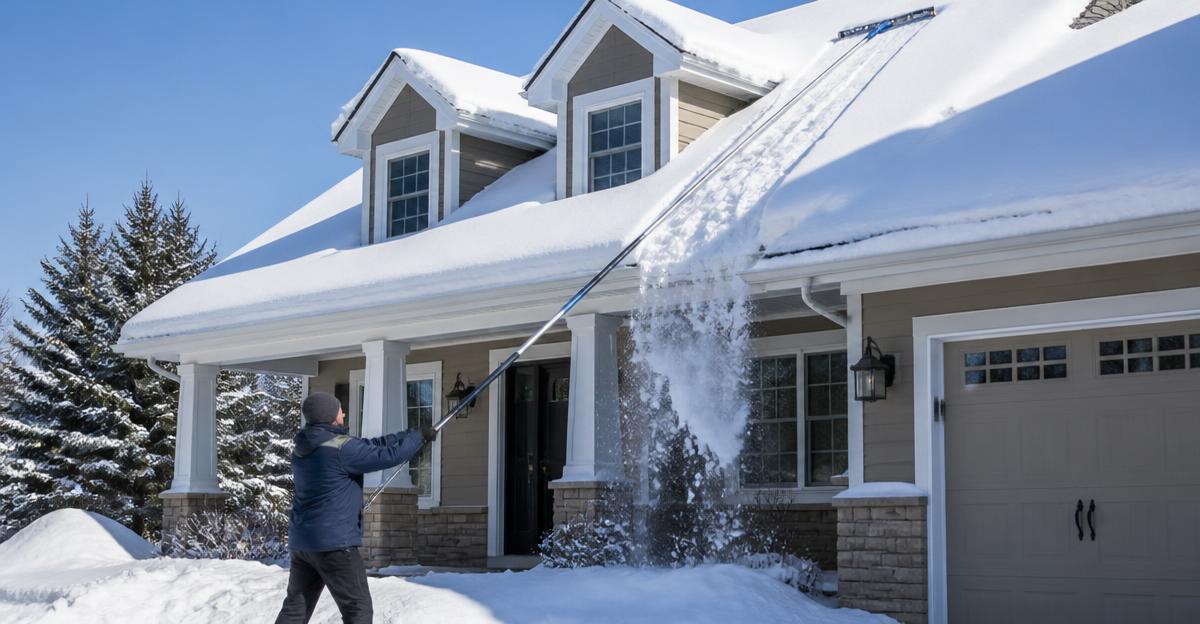
When should you remove snow from a roof?
Not every snowfall means that snow must be removed immediately. The safe load depends on the roof's design, structural capacity, age, condition and local weather conditions.
The type of snow also matters. Fresh, dry snow is generally lighter than wet or compacted snow. Repeated snowfall can also build up several layers that become heavier as they settle, melt and refreeze.
Pay closer attention when several snowstorms have added snow without significant melting, snow has become wet, dense or heavily compacted, ice has formed on or beneath the snow, large drifts have formed in specific areas, you notice sagging or unusual roof movement, doors or windows suddenly become difficult to open, or you see leaks, cracks or hear unusual sounds.
Flat and low-pitched roofs can require particular attention because snow and ice may remain on the roof instead of sliding away naturally.
How much does snow on a roof weigh?
Snow depth alone cannot tell you the actual load on a roof.
The weight depends on snow density, moisture content and how compacted the snow has become. Ice is also substantially denser than fresh snow, so a relatively shallow layer can create a significant load.
For example, the Maine Emergency Management Agency notes that approximately 10 to 12 inches of fresh snow can contain about the same amount of water as 1 inch of water, while packed snow can reach the same water content at a much smaller depth.
This means two roofs with a similar-looking layer of snow can be carrying very different loads. For larger commercial buildings, a snow load monitoring system can provide real-time information about the load instead of relying only on visual estimates or snow depth.
What is the safest way to remove snow from a roof?
The safest method depends on the roof type, snow condition, access and amount of accumulation.
For many pitched residential roofs, a roof rake allows snow to be removed while the person stays on the ground. Accessible flat roofs may require a different approach, while heavy accumulation, difficult access or signs of structural stress may require professional snow removal.
Which snow removal method is best for your roof?
The right method depends on the roof type, snow condition and amount of snow present. For larger buildings, combining professional snow removal with real-time snow load monitoring can give building owners better information when deciding when action is needed.
| Snow Removal Method | Best For | Main Benefit | Main Risk |
|---|---|---|---|
| Roof Rake | Pitched residential roofs | Removes snow while you stay on the ground | May leave some snow behind |
| Roof Shovel | Accessible flat roofs | Can remove deeper accumulation | Requires safe roof access |
| Professional Removal | Heavy snow and difficult roofs | Safer for high-risk situations | Higher cost |
| Snow Load Monitoring | Commercial and industrial roofs | Shows how roof load is changing | Does not remove snow |
Should you use a roof rake or a shovel?
For many pitched residential roofs, a roof rake is the safer option because you can work from the ground.
Choose a rake designed specifically for roof snow removal. Avoid sharp tools that can damage shingles, membranes or other roofing materials.
You also do not need to scrape every last piece of snow from the surface. Removing snow down to the roofing material can increase the risk of damaging the roof covering. A shovel may be appropriate for some accessible flat roofs, but roof access introduces additional risks. If the roof is icy, difficult to access or carrying a heavy load, professional removal is generally the safer choice.
How should you remove snow from a flat roof?
Flat roofs require particular care because snow can remain on the surface and accumulate unevenly.
Before anyone accesses the roof, check whether the roof can be entered safely. Look for deep drifts, blocked drains, skylights, roof equipment and areas where snow has accumulated unevenly. Uneven accumulation matters because one part of the roof can carry substantially more load than another.
Commercial properties should have a winter snow management plan before heavy snowfall arrives. The plan should define who monitors conditions, who is responsible for inspection and what conditions trigger snow removal.
For a warehouse, factory or large commercial building, simply looking at the roof and estimating snow depth may not provide enough information. Actual load monitoring can give building managers a better basis for deciding when action is needed.
What should you avoid when removing roof snow?
Avoid methods that increase the risk of injury, roof damage or uncontrolled snow movement.
Should you climb onto an icy roof?
No, not unless the work is being carried out by properly trained and equipped professionals. Snow can hide ice, weak areas and changes in the roof surface. Falling from a roof can cause serious injury even at relatively low heights.
Should you use sharp tools to remove snow?
No. Ice picks and other sharp tools can damage roofing materials and create punctures that may later cause water damage.
Should you remove large amounts of snow at once?
No. Large masses of snow can fall unexpectedly and injure people or damage property below. Remove snow in controlled amounts and keep people away from the area underneath the work.
Should you use heat to melt roof snow?
No. Open flames, heat guns and similar equipment can create fire and water-damage risks. Mechanical removal using suitable equipment is generally safer.
Should you clear gutters and drains?
Yes. Snow and ice can block drainage paths and prevent meltwater from leaving the roof properly.
What are the warning signs of dangerous roof snow load?
Warning signs can include visible changes to the roof, new damage or unusual sounds.
Look for sagging roof sections, cracks in structural members, new leaks, doors or windows that suddenly stick, unusual creaking or popping sounds, cracks in walls or ceilings, and heavy snow or ice accumulation in one area.
If you notice these signs, do not climb onto the roof to investigate. Move people away from the affected area and contact a qualified professional.
When should you hire a professional?
Professional snow removal is the safer option when the roof is steep, icy, difficult to access, heavily loaded or showing signs of structural stress.
It is particularly important for commercial and industrial buildings. These roofs can be much larger than residential roofs, and snow can accumulate around parapets, changes in roof level, equipment and other obstructions.
A qualified professional can assess the conditions and use suitable equipment without creating unnecessary damage. Building owners should also consider what happens after the snow is removed. If heavy snowfall continues, clearing the roof once may not solve the problem. Ongoing monitoring can help determine whether another intervention is required.
How can snow load monitoring help?
Snow load monitoring helps answer a question that snow depth alone cannot: how much weight is actually on the roof?
Fresh snow, wet snow, compacted snow and ice can all have very different densities. This means the same snow depth can produce very different roof loads. This becomes particularly important on large commercial and industrial roofs where manual inspection can be difficult and the consequences of excessive loading can be serious.
A real-time snow load monitoring system can continuously measure the roof load and provide data that helps building owners and facility managers make better decisions. Instead of waiting until the snow looks dangerous, building managers can monitor how the load is changing and establish clear action points for snow removal.
Monitoring does not replace safe snow removal, structural design or professional assessment. It provides better information before a decision needs to be made.
Does every roof need the same snow removal approach?
No. Roof design makes a major difference.
A steep pitched roof may allow some snow to slide naturally, but sliding snow can create a hazard for people and property below. A low-pitched or flat roof may hold snow for much longer. Roof materials also have different characteristics, so metal roofs, membrane roofs and shingle roofs may require different tools and removal methods.
The age and condition of the roof also matter. An older structure with existing damage may have a different risk profile from a newer roof in good condition. For these reasons, a fixed rule such as remove snow when it reaches a certain depth should not be treated as a universal safety limit.
How can you prepare for heavy snowfall?
The best time to plan roof snow removal is before heavy snowfall arrives.
Check the roof condition before winter. Make sure gutters and drainage systems are clear, identify safe access points and decide who will handle snow removal if accumulation becomes excessive.
For commercial buildings, create a written snow management plan. Define who will monitor weather conditions, who will inspect the roof and what conditions will trigger snow removal.
If the building has a large or complex roof, consider adding real-time snow load monitoring to the winter plan. This can provide useful information when snow depth alone does not show the full load on the structure.
Final Thoughts
Safe roof snow removal is not simply about getting snow off the roof as quickly as possible. The better approach is to understand how much weight the roof is carrying, how that load is changing and whether the roof is showing signs of stress.
For a small home after a light snowfall, a roof rake and sensible precautions may be sufficient. For a large commercial or industrial building, decisions should be based on a proper snow management plan and reliable information about the roof load.
That is where real-time monitoring can add value. By combining safe snow removal practices with continuous load information, building owners can make better-informed decisions before a heavy snow event becomes a structural problem.
Frequently asked questions
How much snow is too much for a roof?
There is no single snow depth that is safe for every roof. The weight depends on snow density, moisture content, compaction, ice accumulation and the roof's structural capacity.
Can I remove snow from my roof myself?
You may be able to remove light snow from some pitched roofs using a suitable roof rake while staying on the ground. Do not climb onto an icy or snow-covered roof. Heavy accumulation, difficult access and commercial roofs are better handled by qualified professionals.
What is the safest tool for roof snow removal?
A roof rake is generally suitable for removing snow from many pitched roofs while staying on the ground. Use equipment designed for roof snow removal and avoid sharp tools that could damage the roof covering.
Should I remove all the snow from my roof?
No. Trying to scrape the roof completely clean can damage the roofing material. Follow the roof covering manufacturer's guidance and avoid scraping directly against the surface.
Does wet snow weigh more than fresh snow?
Yes. Wet and compacted snow contains more water and is denser than fresh, dry snow. This means a relatively shallow layer of wet snow can create a much higher roof load than the same depth of dry snow.
When should a commercial building remove snow from its roof?
A commercial building should follow a planned snow management process based on its roof design, structural capacity and actual conditions. Heavy wet snow, repeated storms, large drifts and signs of structural stress require prompt attention.
Can snow load monitoring replace snow removal?
No. Monitoring measures or tracks roof load; it does not remove snow. Its purpose is to give building owners and facility managers better information when deciding whether action may be required.
Next step
Want to see how roof load monitoring would work on your buildings?
We review your properties, suggest sensor placement and show you how the portal looks in operation. Free of charge and without commitment.